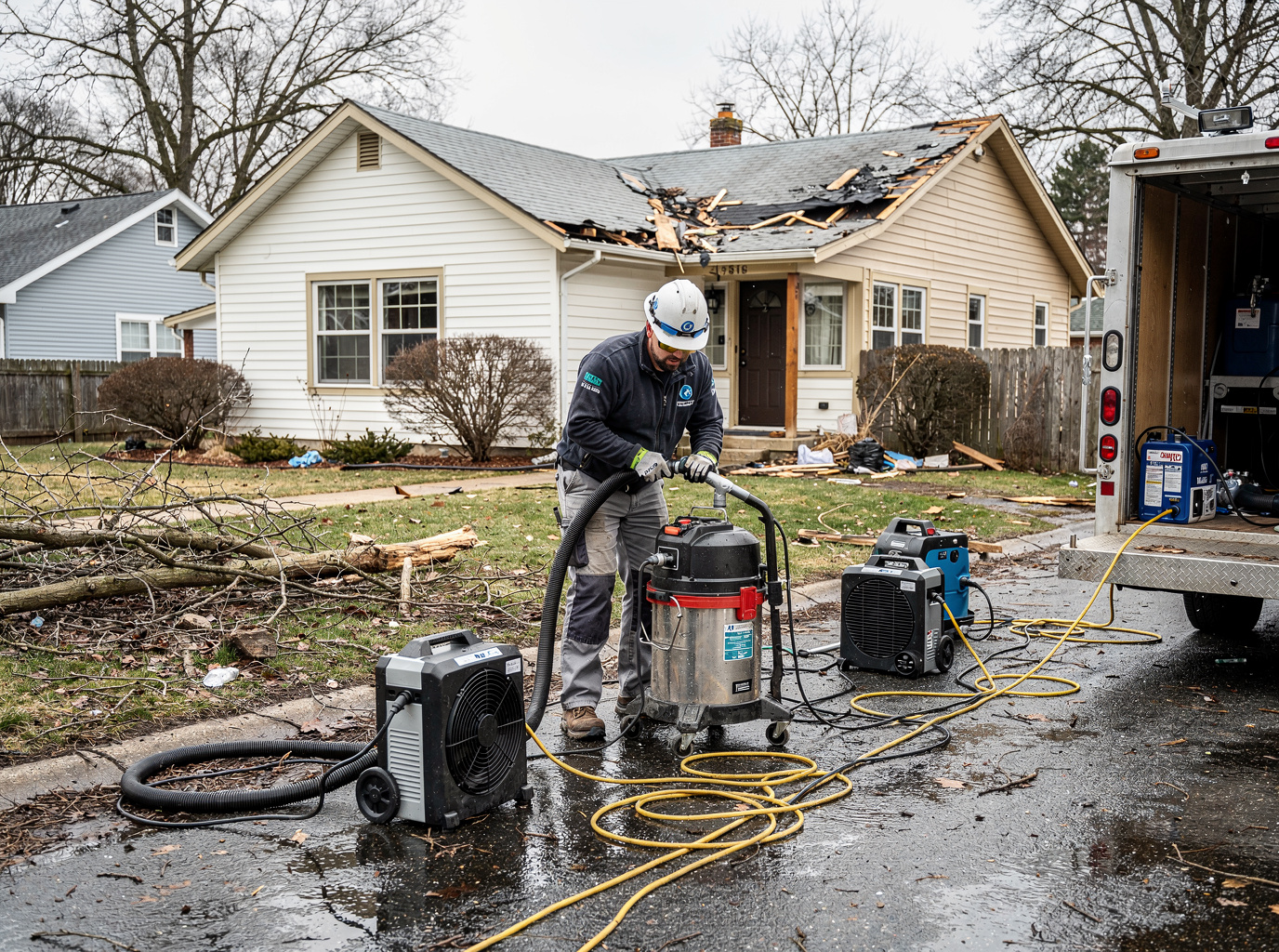
Front Range Property Shield responds to water damage restoration calls throughout Denver Technological Center, reaching properties along South Yosemite Street and DTC Parkway within minutes from the Greenwood Village shop. Commercial offices and mid-rise buildings here sit on lots with limited side access, so crews stage equipment on the main drives and use interior corridors to move drying equipment without blocking tenant traffic.
Winter freezes along Arapahoe Road and Belleview Avenue frequently split older supply lines inside 1980s office shells. Once temperatures climb again, water migrates through suspended ceilings and into shared mechanical rooms. Summer cloudbursts can overwhelm the shallow drainage swales that run behind Greenwood Plaza, pushing water into lower-level parking and utility spaces common in this district.
Because Denver Technological Center sits between I-25 and the Cherry Creek corridor, crews monitor both the light-rail right-of-way and surface streets to keep response times short even during rush hour. Every job starts with a walk-through that notes the building’s flat-roof drains and the condition of the shared sump systems that serve multiple tenants.
Around Denver Technological Center
We regularly work near:
- 📍South Yosemite Street
- 📍DTC Parkway
- 📍Belleview Avenue
- 📍Greenwood Plaza Boulevard
- 📍DTC Light Rail Station
Water Damage Restoration in Denver Technological Center — Local Notes
- •Most DTC buildings were built between 1978 and 1992 with steel-stud walls and flat modified-bitumen roofs that collect heavy spring snow loads before leaking into top-floor suites.
- •Shallow lot grading and narrow rear service drives limit the placement of large dehumidifiers, so technicians often run hoses through stairwells to exterior drains on Arapahoe Road.
- •Freeze-thaw cycles in Arapahoe County hit the older copper risers hardest; crews carry infrared cameras on every winter call to locate hidden leaks behind corridor walls.
- •Proximity to the creek corridor means occasional groundwater seepage after heavy rains, requiring perimeter wall drying that accounts for the clay soils typical in this part of Englewood.