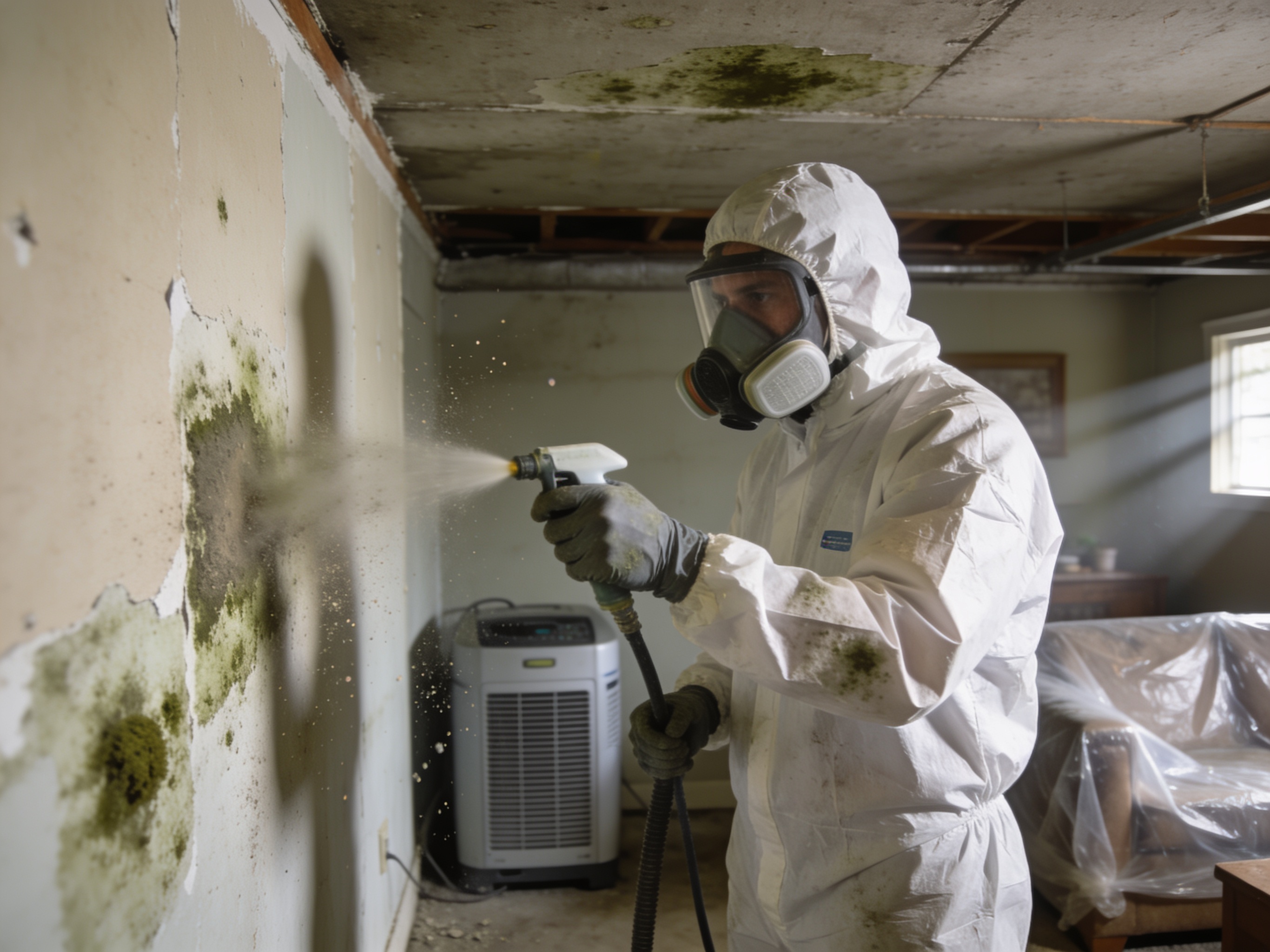
Englewood homes built before the 1980s often feature plaster walls and unsealed basements that trap moisture after pipe leaks or roof runoff. In neighborhoods like Downtown Englewood and around Belleview Park, cold winter temperatures cause condensation on uninsulated foundations, allowing mold to establish behind baseboards and under flooring. Remediation crews must remove affected drywall sections while protecting HVAC systems that can spread spores to upper levels in multi-story properties common near Cushing Park.
Semi-arid summers bring rapid surface drying that hides ongoing subsurface moisture in Arapahoe County soil, especially in low-lying areas near Littleton and Cherry Hills Village. Technicians test moisture levels in framing lumber and subfloors using meters calibrated for Colorado's clay-heavy ground, which retains water longer than expected. Containment barriers and negative air machines prevent cross-contamination during removal, and all porous materials like carpet padding are disposed of rather than treated to avoid recurrence.
Homeowners sometimes attempt bleach cleaning on visible spots, which fails to address roots in drywall paper or insulation and can drive spores deeper into wall cavities. Local code in Englewood requires proper disposal of contaminated materials at Arapahoe County facilities, and crews document every step for insurance claims involving water events from nearby Denver-area storms.
Edge cases include mold growth inside crawlspaces of raised homes near Englewood City Center, where poor ventilation combines with winter pipe condensation. Full remediation often requires temporary relocation of contents and post-clearance air sampling to confirm spore counts return to outdoor baselines typical for the Front Range.
Technician insight
In Englewood the thing that catches most people out with Mold Remediation is winter condensation behind plaster in pre-1970 homes around Cushing Park, where cold nights meet warm indoor air and moisture sits in the wall cavities for months before anyone notices.
Hidden Growth After Pipe Leak
A homeowner in Downtown Englewood noticed musty smells after a bathroom pipe burst during a January freeze. Inspection found mold behind the shower wall and into the adjacent bedroom subfloor. Crews contained the space, removed the affected plaster and insulation, dried the framing, and treated the remaining surfaces before clearance testing confirmed safe levels.
Mold Remediation Services We Offer
✓Basement Mold Removal
Remove mold from Englewood basements after sump pump failures or foundation seepage common in Cushing Park homes, including disposal of affected drywall and insulation.
✓Attic Mold Remediation
Address mold in attics caused by ice dam leaks during cold Arapahoe County winters, with ventilation improvements to prevent regrowth in older Englewood roofing.
✓Post-Flood Mold Treatment
Clean and treat structures after flooding from Littleton or Denver-area events, focusing on hidden growth in subfloors and wall cavities of Downtown Englewood properties.
✓HVAC Mold Cleaning
Clean mold from ductwork and coils that spreads spores through homes near Belleview Park, restoring airflow without disturbing settled contaminants.
✓Drywall Mold Remediation
Cut out and replace mold-affected drywall sections in living spaces, using containment to protect adjacent rooms in multi-unit buildings around Englewood City Center.
Mold Remediation Cost in Englewood, CO
| Service | Typical Range | What Affects It |
|---|---|---|
| Small area under 100 sq ft | $800–$1,600 | Visible surface growth only, single room |
| Medium remediation 100–300 sq ft | $2,000–$4,500 | Includes drywall removal and HVAC cleaning |
| Large or multi-room project | $5,000–$9,000 | Hidden growth in basements or attics plus contents handling |
| Air sampling and clearance testing | $300–$600 | Required after any containment work |
Ranges are typical for Englewood, CO and confirmed with an exact written quote before any work starts.
How it works
- 1
Initial Assessment
Inspect affected areas in the Englewood property using moisture meters and visual checks for hidden growth behind walls and under floors.
- 2
Containment Setup
Install plastic barriers and negative air machines to isolate the work zone and prevent spore spread to unaffected rooms.
- 3
Material Removal
Remove and dispose of porous materials like drywall, carpet, and insulation while HEPA vacuuming remaining surfaces.
- 4
Drying and Treatment
Apply antimicrobial solutions after drying the structure with industrial equipment suited to Colorado's dry air.
- 5
Final Clearance
Conduct air sampling and visual inspection to confirm the space meets safe standards before returning contents.
Pricing
Costs depend on square footage, depth of hidden growth, and whether contents require separate handling.